
Welcome to GGTC Kyiv

Advancing and strengthening Ukraine’s role as a trusted and innovative GovTech ecosystem partner worldwide. Making digital governance more resilient and enabling impact-oriented public sector transformation.

GovTech Lab Ukraine: Open Call for Startups

Until November 16th, submit your proposed solution to one of 4 focus areas. Selected companies will get up to $100,000 for co-development and implementation.

Transforming systems to build efficient and inclusive digital governance together.

The Centre for the Fourth Industrial Revolution Network (C4IR Network), founded by the World Economic Forum, connects innovation hubs worldwide to shape the future of digital transformation. With the launch of the Global Government Technology Centre (GGTC) in Kyiv, Ukraine joins this pioneering community, ready to contribute to global advancements in GovTech while transforming its own digital public sector.

Our core initiatives

The Centre’s initiatives will drive the mission of the Centre, fostering innovation and collaboration to create meaningful impact across sectors.

GovTech Observatory

A research hub that provides the most credible and comprehensive insights into global GovTech trends. Sharing the best GovTech practices to drive global innovation through the Forum’s network.

Innovation Gateway

Ukraine – a leading space for piloting digital solutions and a testing ground for scalable public sector innovations. Validating world-class GovTech and other innovations through pilot projects in Ukraine.

FutureGov Education

Programmes for aspiring digital leaders in the public sector. CDTO Campus partners to bring together top digital talent and share impactful programmes for advancing digital governance in the public sector.

Recent news

Featured knowledge

Case Studies

Ukraine's GovTech Reform Index, by Vox Ukraine and GGTC Kyiv, scores digitalisation regulations quarterly. Based on 487 regulatory acts assessed so far, it shows how a wartime state builds digital infrastructure and where implementation lags.The ChallengeUkraine's digital state is well known abroad, from the Diia app and portal to its climb from 75th to 1st place in the UN E-Participation Index between 2018 and 2024. Yet digital transformation needs more than apps: it needs a robust, high-quality regulatory foundation. Amid war and accelerated EU integration, Ukrainian institutions must track whether digital regulations adopted by many government bodies are technically and legally feasible.Since early 2025 , the joint analytical team of Vox Ukraine and GGTC Kyiv, navigating through the hundreds of regulations being adopted each month, has identified 487 new digitalisation-related regulations, most of them adopted by the Cabinet of Ministers. Policymakers, donors and businesses need to know which acts create something genuinely new, which merely adjust procedures, and which the state can actually implement. Without a consistent answer, gaps might be unnoticed: the 'Active Parks' platform and mobile app have operated since 2021, while a specific legal digital framework was adopted in 2026.The SolutionThe GovTech Reform Index is a quarterly, expert-based assessment of the regulations that shape Ukraine's digital state. For more than a decade, Vox Ukraine has tracked and evaluated changes in national legislation through its flagship Reform Index. The Index builds on a retrospective baseline: the Reform Radar review of more than 100 acts adopted in 2019–2024.The main beneficiaries are government teams, which get an external signal on their regulatory pipeline; international partners, which see where support is most needed; businesses, which learn early about new obligations; and civil society, researchers and journalists, who gain an evidence base for public debate.Independence As a Core Governance PrincipleEvery act is scored on three questions: how digitally innovative it is, whether the state has the resources to implement it, and how long its impact is likely to last? The scores capture the potential of the changes a regulation introduces, not how they are implemented in practice.Scoring is done by an independent Expert Council, an interdisciplinary and cross-sectoral body of experts. Government officials do not sit on it, and experts with a link to a specific act do not assess it. The methodology, the quarterly reports and the full list of assessed acts are public. The Index is also a communication and public-enlightenment project. For each volume, the team publishes social media posts explaining in plain language what new rules change, and actively shares the releases with public officials, GovTech practitioners, universities, students and international institutions. The open list of Expert Council members and their published comments give visibility to the experts' knowledge and help build a community of like-minded professionals committed to change.What the Data ShowsSix quarters reveal patterns no single act shows. The graph below breaks the Index down into its three criteria. Implementation feasibility (orange line) shows the experts' assessments of whether the state has the resources, people, and systems needed to put a regulation into a practice. Ambition and feasibility tend to trade off, but not always. In the first half of 2025, acts were more innovative but harder to implement; in the second half, detailed secondary legislation made implementation easier but innovation fell (Volume 2). The 2026 scores are close to their best levels at once, which lifted the Index to its highest values to date.Graph. Average scores by evaluation criterionFrom Digital Services to Digital InfrastructureThe top-scoring act of the entire series (2.83) is a national repository of cyber incident data. Other highly rated acts include a National Carbon Registry and a geographic information system that traces agricultural exports to plot level for the EU deforestation rules.Existing Infrastructure Streamlines ImplementationFeasibility scores are highest where acts build on systems already in place — the Trembita data-exchange platform, Diia or the State Agrarian Register, which now automatically verifies farmers' eligibility for export-duty exemptions instead of relying on certificates from the Chamber of Commerce and Industry.EU Integration Driving Regulatory ChangeSeveral highly rated acts implement EU rules — DORA-aligned security requirements for the financial sector, the EU deforestation regulation, electricity market coupling — and a wave of cybersecurity acts in late 2025 brought Ukraine closer to the Network and Information Security Directive 2 (NIS2).Limits and ScalabilityBecause the Index assesses potential rather than outcomes, transparency is essential: anchored scoring scales, median aggregation and published comments keep expert judgment open to scrutiny, and linking scores to later implementation data is a logical next step. The Index does not yet measure equity and inclusion directly, although experts note, for instance, whether a digitalised procedure keeps a paper option.The Index uses only public documents, processes no personal data and needs no specialised technology. That makes it portable: any country, region or sector with an open legal database and a pool of independent experts can adapt the approach to their own context. It complements, rather than competes with, global maturity indexes such as the World Bank's GovTech Maturity Index or the UN E-Government Development Index: they measure the stock of digital government every few years, while the Index tracks the flow of rules that change it.Lessons for OthersThe Ukrainian experience suggests four lessons:Measure the flow, not only the stock. Quarterly scoring of new rules gives an early signal — one that multi-year rankings of digital couldn’t.Assess feasibility separately from ambition. The gap between what a regulation promises and what the state can deliver is often a useful finding.Start with a baseline. A review of past legislation gives the first results context.Make measurement understandable. Plain-language explanations and open expert engagement can turn the technical index into a shared resource and a community that keeps the conversation about reform going.  The GovTech Reform Index is supported by the Swiss-Ukrainian EGAP Program (East Europe Foundation) and the Askold and Dir Fund (ISAR Ednannia, funded by Norway and Sweden).
Reading the Law to Read the State: What Nearly 500 Regulations Reveal About Ukraine's Digitalisation

Ukraine transformed its State Statistics Service from a legacy institution into a modern, AI-powered data organisation, making official statistics more accessible to government, businesses, researchers and the public.The Challenge: Outdated Systems Meet Modern DemandsUkraine’s State Statistics Service (Ukrstat) operated on fragmented, legacy infrastructure. Data was often collected manually, processed across 45 separate systems, some of them 20–25 years old, and published through a static portal. One critical system was maintained by a single specialist, creating significant operational risk. The core stages of statistical production – collection, processing and dissemination – were disconnected, with manual transfers between Excel tables and other systems. Even a simple administrative change could require updates across dozens of separate databases.The consequences were systemic. Policymakers lacked a modern, reliable data foundation, while international organisations could not easily access Ukrainian statistics in formats compatible with global standards – a critical gap as Ukraine pursued EU integration.Transforming the institution required more than new technology. With approximately 6,000 staff before 2022, Ukrstat’s workflows were shaped by analogue processes and a traditional, compliance-oriented operating model. Moving towards a more product-oriented, user-first approach required changes to organisational culture, roles and capabilities.The full-scale war that began in February 2022 added further pressure. Traditional data collection was disrupted, while demand for timely and high-quality statistics increased as Ukraine responded to the economic, social and reconstruction challenges created by the war.The transformation was therefore both a technological and institutional challenge: Ukrstat needed to modernise how it produced statistics while building a more resilient organisation capable of operating under prolonged disruption.The Solution: Sigma As A Unified Statistical EcosystemThe solution was Sigma, a unified technological ecosystem designed to replace 45 legacy systems and support the complete statistical lifecycle. The core of the new system is built on EPAM’s adaptable QuantHub platform, configured specifically for Ukrstat’s needs. Its publicly accessible portal launched in beta in August 2023 and moved into full production in November 2025.Built on SDMX standards, Sigma supports interoperability with the global statistical ecosystem, including Eurostat, the IMF, the World Bank and the OECD, and provides access to more than 2,000 statistical indicators.The platform combines several capabilities. StatGPT provides a natural-language interface to official statistics through an open-source conversational AI assistant built on the AI DIAL platform. It retrieves information from official Ukrstat APIs using a retrieval-augmented generation architecture and provides links to the underlying source data. The tool supports multiple languages and integrates with Ukraine’s national digital identity systems, including Diia, BankID and id.gov.ua. Released as an open-source Digital Public Good, StatGPT can be reused by other national statistical offices. Ukraine is the second institution in the world, after the IMF, to deploy an AI assistant for official statistics.Sigma also includes an online survey module, enabling secure population surveys and providing an alternative channel for data collection when wartime conditions make traditional fieldwork difficult. API integration automates the exchange of data with administrative data suppliers, international institutions and other users of official statistics. One government ministry has already transitioned to daily automated retrieval through an API, eliminating manual file transfers.The platform’s cloud infrastructure is hosted on Microsoft Azure outside Ukraine, with layered security measures including Zero Trust architecture, geographic redundancy and continuous monitoring. This approach strengthens resilience against risks to physical infrastructure and supports continuity during wartime.Together, these capabilities move Ukrstat from a collection of disconnected systems towards a more integrated statistical ecosystem. Sigma is not only a technology platform, but also the digital foundation for a broader shift towards more accessible, interoperable and user-centred official statistics.Implementing the Capacity-Building TransformationThe reform was initiated in 2021 under the Ministry of Digital Transformation, with a new law on official statistics providing the regulatory foundation. The project was delivered through the Swiss-Ukrainian EGAP Programme, administered by the East Europe Foundation. Following a competitive tender, EPAM was selected as technology partner and consultant.The partnership brought together government ownership, international financing and technical expertise. This model provided the institutional authority and delivery capacity needed to undertake a transformation extending beyond technology into organisational design and institutional capability.The project followed a phased approach: audit and strategy in 2021; platform development and organisational redesign, including the introduction of the SAFe methodology, in 2022; public beta launch in August 2023; and data migration and full production launch with integrated StatGPT in November 2025.A key part of implementation was preparing Ukrstat to sustain the transformation independently. EPAM supported the creation and staffing of the Centre for Statistical Data Processing, a separate state institution designed to operate under more flexible, near-market conditions to attract specialised technical talent. The new centre has around 25 specialists, who were trained and supported during its formation.Capability-building also extended across Ukrstat. Employees were trained in product and project management, while roles in the new statistical production process were redefined. The objective was to embed the operating practices of a modern technology organisation within a public institution, allowing Ukrstat to maintain and develop Sigma independently.The transformation also forms part of Ukrstat’s broader strategic direction. The agency has positioned itself as an architect of the national data ecosystem, with strategic priorities that include stronger digital infrastructure, improved statistical products, more people-centred statistics and greater institutional capacity.Tackling the Conditional and Organisational ChallengesThe scale of the transition created challenges throughout implementation. One of the most significant was data migration: the complexity of transferring tens of thousands of tables was initially underestimated, affecting timelines.Organisational change was another challenge. Staff who had worked with legacy tools and established processes needed time to adapt to the new operating model. After launch, user feedback also identified gaps in the platform’s usability. For example, the search function initially did not recognise commonly used terms such as “GDP” or “inflation” when users expected them to correspond to official statistical terminology. These issues were addressed through systematic feedback from an expert group of 35 specialists.The pace of transformation was also shaped by the nature of official statistics. Statistical production operates according to internationally synchronised calendars and methodological requirements, creating a different rhythm from a typical technology environment.Wartime conditions added another layer of complexity. Active hostilities disrupted field data collection and created risks to physical infrastructure. Hosting Sigma outside Ukraine and introducing alternative digital collection methods were therefore not only technology choices, but measures designed to strengthen continuity. Modern cybersecurity protections were incorporated into the new solution, while Ukrstat’s legacy information systems were affected by a major cyberattack in 2023.New Approach to Statistics Gathering as a Measurable ImpactThe transformation has established a new digital foundation for the production and use of official statistics in Ukraine:2,000+ statistical indicators are available through one public portal.5,000 StatGPT conversations were recorded during the first 2.5 months after launch.Ukraine became the second institution in the world, after the IMF, to deploy an AI assistant for official statistics.SDMX compliance supports interoperability with Eurostat, the IMF, the OECD and other international partners.A new Centre for Statistical Data Processing was established with around 25 technical specialists.Sigma provides the technical foundation for future reforms, including the potential use of nationwide transactional data for consumer price index calculations.Beyond these measurable outputs, the transformation has changed the way official statistics can be produced and accessed. Data is being brought into a more integrated digital environment, while users can increasingly interact with official statistics through interfaces designed around their needs rather than the structure of legacy systems.Equity and Inclusion of StatGPTMaking official statistics easier to access is a central element of the transformation. StatGPT’s natural-language interface reduces the specialist knowledge required to find and interpret official data, while multilingual functionality can extend access to international researchers and other users.Integration with Ukraine’s national digital identity systems can also reduce friction in accessing digital services. At the same time, the online survey module supports continued statistical coverage across regions and population groups affected by the war by providing an alternative to traditional field-based collection.These choices support Ukrstat’s broader objective of developing more people-centred statistics: data that is not only produced to a high standard, but is accessible, understandable and useful to the people and institutions that rely on it.Lessons for Other GovernmentsCombine technical and organisational reformTechnology alone does not create institutional transformation. Redesigning roles, building new capabilities and shifting organisational culture need to happen alongside the development of new digital infrastructure.Build institutional capacity from the outsetKnowledge transfer and the creation of internal technical capabilities can help public institutions sustain and further develop new systems after external delivery partners step back.Use international standards as a design principleBuilding around standards such as SDMX can strengthen interoperability, facilitate engagement with international partners and support alignment with wider regional and global reform agendas.Use open source to extend public valueReleasing reusable components can allow solutions developed for one public institution to be adapted elsewhere, extending the value of public investment beyond the original use case.Design for continuity under disruptionCloud infrastructure, alternative data-collection channels and phased implementation can help governments maintain critical functions when conventional systems or operating environments are disrupted.Next Steps: A Three-Year RoadmapIn 2026, Ukrstat plans to consolidate regional statistics from 25 separate websites into a single platform. The next phase also includes integration with State Tax Service scanner data to support daily price monitoring, continued migration of remaining statistical observations under a three-year roadmap and further automation of data exchange across government.These steps are intended to build on Sigma’s role as the digital foundation of Ukraine’s statistical system and further strengthen the accessibility, interoperability and resilience of official statistics.
Transforming National Statistics: How Ukraine Built a Modern Data Platform for the State Statistics Service

GGTC Kyiv
Context Anglo American’s Kumba Iron Ore operates in South Africa’s Northern Cape Province, a region characterised by persistently high unemployment and limited pathways into stable, sustainable employment. At the same time, both the mining operations and the broader regional economy depend on a reliable pipeline of trade and artisanal skills. These include formal artisan disciplines such as Electrician, Fitter, Millwright and Boilermaker, as well as portable skills such as welding, plumbing, carpentry, bricklaying, tiling, and plastering. Kumba also offers formal development programmes in plant and mining skills to further strengthen local capability and improve mine sustainability. When these critical skills are in short supply, the impact is felt across the community and industry. Individuals seeking employment remain excluded from economic opportunity, while employers and contractors struggle to source job‑ready talent locally and are often required to bring in skills from outside the region. Over time, this weakens the local economy and contributes to an insufficient talent pipeline that is unable to meet current and future demand. Approach Kumba has responded by bringing skills development closer to the communities that need it most and by prioritising training that leads to meaningful economic opportunity. Through its training centres in Kathu and Kuruman for Sishen, and in Postmasburg for Kolomela, as well as training centres based on-mine at both Sishen and Kolomela, the company provides community members with access to accredited, hands‑on learning in practical skills that are valuable both within and beyond the mining sector. The emphasis is on portable-, engineering and operational skills that benefit society across various contexts, including construction, maintenance, local services, contracting, and self‑employment. These off-mine centres specialise in core practical trades such as welding, plumbing, and carpentry, and Kumba’s broader regional planning also incorporates construction and repair skills such as bricklaying. In addition to community‑based craft training, the company invests in a stronger long‑term skills pipeline through structured formal artisan development. This approach creates a progression pathway that supports immediate job‑readiness by equipping individuals with foundational trade competencies, while also building deeper technical capabilities needed to develop future artisans who can fulfil critical roles over time. Furthermore, mine‑based skills programmes in processing and mining operations ensure that Kumba’s labour pipeline is developed and sourced locally. This strengthens long‑term sustainability for both the surrounding communities and the mining operations themselves. Results Kumba trained more than 2,200 people between 2023 and 2024 across a wide range of skills, from formal artisan programmes such as Electrician and Millwright to portable skills such as plumbing, welding, and bricklaying, as well as mining and processing operational skills. This investment has created meaningful employment pathways for individuals previously excluded from the labour market, while strengthening the local supply of critical trade and craft skills to meet growing demand. In 2024, Kumba expanded its commitment to inclusive development by launching formal learnership programmes specifically for locally based, unemployed persons with disabilities. These programmes provide accredited qualifications in areas such as farming, end‑user computing, and community development. The continued growth in training reach, the diversification of skills offered, and the sustained investment in developing future artisans, mining and plant operators, and skilled tradespersons demonstrate a deliberate strategy to build both short‑term employability and long‑term technical capacity. This ensures that local communities benefit from improved economic opportunities while the regional economy gains a reliable and sustainable talent pipeline.
South Africa
Anglo American – Building local maker skills pipelines for regional growth

Anglo American
ContextThe Evolving Landscape of the Skilled TradesThe skilled trades are experiencing a profound evolution. As the global economy increasingly values hands-on expertise and localized infrastructure, trade occupations have solidified their position as premier pathways to economic mobility and business ownership. However, long-term success in the modern trade sector requires more than technical mastery. When an expert technician transitions into managing a team or launching an independent business, they face an entirely new set of demands.Historically, traditional trade education has focused strictly on technical competence. Yet, for early-career professionals and aspiring business owners, small gaps in operational functions—such as financing, project scheduling, pricing discipline, customer service, and client communication—can mean the difference between a career that stabilizes or one that stalls. To build a resilient enterprise, business owners require specialized training in job costing, cash flow management, reliable lead generation, and scalable leadership practices.Technology as a Catalyst for GrowthSimultaneously, technological advancements are reshaping trade workflows just as rapidly as any other economic sector. Emerging tools, including agentic and generative AI, are fundamentally changing how modern tradespeople plan tasks, generate project estimates, automate customer communication, and optimize field logistics. Modern trade professionals who adopt these tools gain significant advantages in operational speed, quality control, and customer trust—building robust, future-proof careers in an era of rapid economic shift.Facing the Macroeconomic Labor GapThis need for comprehensive business and technical training arrives at a critical moment of labor-market pressure. . The U.S. Department of Education estimates that by 2030, the United States could face up to 2.1 million unfilled skilled-trades positions, potentially resulting in $1 trillion in annual economic losses. The current talent pipeline is struggling to keep pace: while nearly 600,000 major skilled-trades jobs were posted last year, only about 150,000 workers entered the field through traditional apprenticeships, according to JLL and Fortune . Furthermore, Consumer Affairs data shows that for every five retiring workers in construction and manufacturing, only two replacements enter the workforce. This widening imbalance places immense pressure on our collective ability to build and maintain vital national infrastructure. It is precisely this challenge that catalyzed The Home Depot to establish the Path to Pro Program.ApproachNew Learning CollaborationThe Home Depot and Georgia Tech are excited to announce a new strategic collaboration which will expand the Path to Pro Program’s industry-leading entry-level technical trade training on PathtoPro.com via Georgia Tech’s proprietary learning platform. This new collaboration will offer durable skill and specialized business and entrepreneurship training to students, while also making Georgia Tech's content available to Path to Pro Program users.This collaboration will help address the national skilled labor shortage by not only training workers, but also developing the next generation of trade business leaders. Key objectives include:1. Business and Professional Skills: Augmenting technical training to accelerate early-career performance and professional communication.2. Financial Literacy: Building the foundational skills required for eventual property investment, project quoting, and business ownership.3. Entrepreneurship Readiness: Assisting trade professionals in transitioning from employee to small business owner with sustainable financial and operational practices.4.Technology Enablement: Integrating emerging tools—especially AI—into technical workflows to accelerate learning, optimize jobsite execution, and improve customer experience.Anticipated OutcomesThis collaborative content integration invites learners into an enriched educational ecosystem. Armed with Georgia Tech’s content on durable skills and business acumen, entry-level trades professionals will enter the workforce with a well-rounded set of skills designed to promote career progression, while experienced trades professionals will enter new business ventures better prepared to manage cash flow, navigate operations, and build ownership confidence, making these ventures more likely to succeed. Concurrently, Pros will leverage AI-enabled tools and modern workflows to increase efficiency, reduce rework, and scale their businesses. Taken holistically, this approach promotes the full career arc of a trade professional, enabling career and economic mobility and enhancing our nation’s workforce at this critical time.At scale, this collaboration will reach thousands of Path to Pro Program learners, embedding Georgia Tech-designed business, entrepreneurship, and technology modules into a proven, national skilled-trades pipeline. By uniting with Georgia Tech, the program builds upon its substantial momentum, equipping the next generation of trades professionals to not only secure high-demand jobs but to become resilient, lifetime learners ready to build lasting, sustainable careers and enterprises. 
USA
Georgia Tech and Home Depot - Path to Pro
Georgia Institute of Technology (Georgia Tech)
Context When Homeboy Electronics Recycling moved into its new Los Angeles County, California facility, the milestone marked more than organizational expansion. It represented a growing ecosystem of opportunity for individuals historically excluded from the workforce, refurbishing the technology that powers daily life. As devices reach the end of their service life, recovery, refurbishment, and reuse can turn them from environmental and economic loss into materials reclaimed and put back into productive use.  At the same time, many individuals face persistent barriers to workforce participation, particularly people who are formerly incarcerated or formerly gang involved. Addressing these challenges together requires models that connect workforce development with, circular technology systems. Homeboy Electronics Recycling operates at this intersection, providing paid employment and hands on, skills-based training for individuals historically excluded from the labor market. Since 2017, HP Inc. has partnered closely with Homeboy Electronics Recycling to help advance this mission, supporting both workforce development and sustainable technology innovation.   Approach Homeboy Electronics Recycling provides paid employment and practical, skills-based training for people who are formerly gang involved or formerly incarcerated and who often face systemic barriers to economic mobility. The training model equips participants building practical skills in device refurbishment and electronics recycling that improves material recoverability. These trade and craft skills are increasingly essential as industries transition toward circular economy models, including repair, reuse, and remanufacturing pathways.   HP’s partnership strengthens this training by introducing technology that improves operational efficiency and builds digital literacy, skills required across modern, technology enabled job roles. Participants gain hands-on experience with HP supported workflows and equipment, including systems used in PC refurbishment, reinforcing both technical proficiency and familiarity with employer relevant technologies. Beyond technology, HP collaborates with Homeboy on sustainability planning, closed loop recycling initiatives, and coordinated visibility efforts.  Results* By pairing meaningful employment with market-relevant training, Homeboy helps build pathways to stability, long-term employability and economic inclusion for communities often overlooked by traditional workforce development initiatives. As of April 2026, HP and Homeboy Electronics Recycling had supported the employment and reskilling of over 380 individuals. The organization’s impact also extends beyond individual participants, strengthening families, reducing recidivism and stimulating local economic activity.The partnership also supports measurable circular economy outcomes. As of April 2026, HP and Homeboy Electronics Recycling had disassembled nearly 4 million kilograms of end-of-service printers and electronics for recycling. The partnership had also sent nearly 39,000 kilograms of ink cartridges to HP’s Planet Partners programme to be remade into new cartridges. The collaboration illustrates how employer-led partnerships can advance trade and craft skills while supporting innovation, sustainability and inclusive economic growth.*Footnote: Data provided by Homeboy Electronics
USA
HP and Homeboy Electronics Recycling: Building Future of Work Skills Through Circular Innovation
HP
Context OECD Programme for International Student Assessment – Vocational Education and Training Assessment is the OECD’s first international largescale assessment focused on vocational education and training. Inspired by PISA, it was created to address a persistent evidence gap: many countries lack globally comparable data on how well VET students apply their occupation specific skills (e.g., trade and vocational, hands-on technical abilities) to real workplace challenges. Without this kind of comparable measurement, it is difficult to benchmark outcomes across different VET models, understand learner characteristics, and identify which programme and labour market features drive stronger results further limiting policy action to improve the relevance, quality, equity, and effectiveness of skills systems. Approach PISAVET is designed as a recurring international assessment (every 3–5 years from 2030 onward subject to a successful development phase) and is being built in stages to ensure credibility and comparability across countries and programmes. Phased international build-out · Development phase (2023–2027): 14 participating countries co-develop instruments and methods. Seven countries (Australia, Brazil, Colombia, Germany, Greece, Portugal, and the United Arab Emirates) are first to implement instruments for measuring occupational skills. · Pilot phase (2027–2030): at least 10–15 countries implement the full set of instruments. · Largescale phase (2030–2034): expansion to more countries worldwide. PISAVET assesses applied occupational competence using methods that go beyond traditional knowledge tests, building on international experience such as ASCOT (Germany), WorldSkills International, and ETS. The assessment combines three task types: 1. Knowledge-based items Scenario-based questions (PISA-style) to test occupation-specific knowledge and the ability to reach correct solutions. 2. Interactive digital simulations Workplace tasks that replicate professional environments to observe problem-solving and decision-making in dynamic contexts. 3. Demonstration tasks Live or recorded practical performances evaluated by expert judges, supported by digital tools to improve consistency and comparability. This approach enables measurement of multiple dimensions, including outcomes, thought/decision-making approaches, performance-based skills, and elements of contribution to team performance via simulation tasks. In addition to occupational tasks, PISAVET captures broader employability skills (e.g., literacy, problem-solving, collaboration) and contextual factors such as student background, institutional features, and labour-market links so countries can interpret results and track patterns over time. Results The programme has established strong international collaboration and employer engagement to co-design credible, innovative assessment methods. A key lesson emerging from the work so far is the value of combining knowledge items, digital simulations demonstration tasks to capture both occupation-specific and transversal skills in authentic ways. From 2030 onwards, the program aims to generate internationally comparable evidence on applied VET outcomes and produce actionable policy insights to strengthen VET system performance. Success is defined by the reliability and validity of instruments, comparability across countries and programmes, the ability to link performance with contextual indicators, and the practical uptake of findings by policymakers, educators, and employers. 
North America, South America, Asia Pacific, Europe
OECD – Building trusted signals of applied vocational competence through PISA-VET

OECD
Context The North American labor market is currently facing a structural scarcity of skilled trades talent. For major industrial players, such as key suppliers of critical energy infrastructure and power generation components, this shortage is compounded by a "pipeline paradox." When high-profile organizations post specialized roles on public job boards, HR departments are often swarmed by hundreds of underqualified applicants.  This creates a significant bottleneck where qualified talent is buried under volume. As a result, many highly skilled tradespeople remain unemployed or underpaid despite a clear demand for their expertise, eventually leading them to stop applying for roles altogether when they fail to get a response. Furthermore, internal HR departments are often tasked with a broad scope of recruitment, covering everything from administrative staff to specialized engineers. In a complex market, we act as a specialized extension of internal talent acquisition teams, providing the deep technical vetting required to identify high-precision tradespeople. ApproachThe Specialized Solution: The "Core" Model Randstad’s Skilled Trades and Industrial Management (STIM) department addresses this by utilizing a specialized "Core" model. Rather than acting as generalists, our recruiters focus on a narrow subset of trades, such as Machinists and Computer Numerical Control Programmers. By specializing, we transition from reactive job board recruitment to a highly targeted, proactive search. We do not wait for the right candidates to apply; we actively map the market, identifying where top-tier talent currently works and understanding the precise motivations that would encourage them to move. For example, the demand for critical energy infrastructure means that aerospace machinists can often transition their existing CNC skills into the energy sector to achieve higher wages and better long-term job security. A recent partnership with an infrastructure manufacturing facility serves as a benchmark for this approach. The client faced a significant backlog in their machining department, which limited efficiencies connected to the production lifecycle of highly regulated power generation components. By leveraging our network in the aerospace sector, we successfully identified and placed several highly skilled CNC Machinists and Programmers. And by championing a skills-based hiring approach and facilitating cross-sector mobility, we recognized that their technical precision transferred perfectly into the energy sector. These candidates transitioned into their new roles immediately without the need for retraining. ResultOperational success: The client successfully cleared their machining backlog through, ensuring the project moved on schedule to the next production stage. Candidate impact: All placements secured higher compensation and stable, long-term careers in a critical infrastructure sector. Strategic growth: Based on the success of these initial placements, the partnership is now expanding across the client's broader regional operations. By building high-speed bridges between industrial sectors, Randstad ensures the most skilled talent is deployed on the world's most critical infrastructure projects. 
Global
Randstad: Bridging the Skilled Trades Gap

Randstad
Context Nearly one in four young people aged 15-24 in Türkiye are not currently in education, employment or training, reflecting a fundamental mismatch between vocational education and labour market needs. Traditional technical and vocational education and training (TVET) remain largely classroom-based, leaving graduates with theoretical knowledge but lacking hands-on experience in the specialised systems and technologies that employers require. At the same time, sectors such as healthcare infrastructure, industrial automation and technical services face significant skills shortages. A key constraint is the limited availability of qualified workplace trainers able to supervise and assess learners in live operational environments. Rönesans has recognized that technical ability alone is not enough to upskill the workforce as structured mechanisms are essential for these individuals to become effective master trainers. Approach Through a partnership between Rönesans Holding, UNICEF's "From Learning to Earning for Youth" programme and Türkiye's Ministry of National Education, Gaziantep City Hospital, a 1,875-bed advanced healthcare facility, has become a working training laboratory. The partnership embeds 120 health vocational high school students directly into operational hospital infrastructure for four days per week, rotating through high-demand technical occupations including industrial automation technologies, plumbing and energy systems, and industrial maintenance and repair. The programme operates through three integrated innovations: Master trainer pedagogy: Rönesans employees receive formal pedagogical training from the Ministry of National Education to become certified master trainers. This directly addresses one of the main challenges of scaling apprenticeships as many companies have technical experts, but not necessarily the skills to teach their craft. These master trainers supervise students on live tasks, transmitting technical expertise alongside professional behaviours, safety protocols and real-time problem-solving. Students learn by observing, assisting and progressively taking ownership of tasks under expert guidance. Safe, inclusive workplace learning standards: UNICEF provides technical guidance to establish standardised safety, inclusivity and learning quality benchmarks within operational facilities, ensuring workplace-based training meets educational standards while accommodating live hospital operations. Multi-stakeholder co-delivery architecture: The Ministry oversees curriculum alignment; UNICEF contributes pedagogical frameworks and inclusion expertise; Rönesans provides operational infrastructure and master trainer capacity; and the European Bank for Reconstruction and Development (EBRD) supports model scalability. Unlike traditional corporate social responsibility or standalone training centres, this model positions private sector operational facilities as active learning assets embedded within core business functions, turning hospitals and industrial operations into apprenticeship platforms without disrupting productivity and service delivery. Results The programme directly serves 120 students annually gaining verified competencies in specialised technical trades. By training Rönesans employees as pedagogically equipped master trainers, this approach creates institutional capacity that extends beyond individual student cohorts, establishing repeatable mechanisms for integrating future learners into operational settings.  Rönesans has successfully demonstrated that apprenticeships can be value-creating investments for companies as employers gain stronger, better-aligned talent pipelines and internal training capability, while students gain practical experience in operational settings that better prepare them for employment. Rönesans is expanding the framework across its diverse business lines (construction, energy, healthcare and industrial operations), creating a replicable blueprint for other large-scale employers. Updates to TVET curricula, improved workplace learning standards and expanded teacher capacity will benefit a much larger number of vocational students across Türkiye, making quality, relevant and future-proof the regional skills system. Students report high satisfaction learning directly from working professionals in technology-rich environments, while employers gain talent pipelines aligned to operational needs. 
Türkiye
Rönesans, UNICEF and the Ministry of National Education – Scaling workplace-based vocational training through master trainers

Rönesans Holding
Mriia—Ukraine’s national digital education ecosystem—currently serves as the core public digital infrastructure for schools, supporting daily operations, communication with parents, and allowing for the continuity of learning for children nationwide.Why Ukraine Needed a Unified Digital Education EcosystemMany education systems continue to rely on fragmented digital tools that make it difficult to coordinate teaching, communicate with families and maintain continuity during disruption.For years, Ukrainian schools relied on paper documentation, disconnected digital tools, and messenger groups to manage grades, attendance, schedules, and homework. School leaders lacked a unified view of operations, while students and parents received inconsistent information depending on the tools used by individual schools or teachers. The full-scale war made this fragmentation a matter of continuity, not convenience. Students and teachers were displaced across Ukraine and abroad. As some schools shifted to remote or hybrid formats, having stable communication between educational institutions and families became critical. In these conditions, the challenge was not simply the lack of digital tools, but the absence of a unified, trusted, state-supported digital interface to help schools maintain continuity of learning amid disruption.The challenge also extended beyond administrative efficiency. For Ukraine, a resilient education system is part of long-term national capacity. It supports the development of skilled, responsible citizens who can contribute to recovery, innovation, economic development, and the country’s future competitiveness.One Digital Ecosystem for the Entire Learning JourneyMriia was developed and jointly implemented by Ukraine’s Ministry of Digital Transformation and the Ministry of Education and Science as a national response to this fragmentation. Its long-term vision extends beyond any single stage of education: The ecosystem is designed to connect preschool, school, higher education, professional development and lifelong learning, rather than leaving each level dependent on separate systems, tools and records.Every school has free access to one state-backed platform through Mriia. Its web portal gives administrators and teachers a comprehensive workspace for planning, documentation, timetabling, and analytics, while mobile applications provide teachers, students and parents with daily access to grades, schedules, updates, and communication with the school.Access is based on secure, state-backed digital identification rather than a standard username-and-password model. Once users verify their identity, the ecosystem checks their role through AIKOM, the automated information complex for educational management in Ukraine. Each person then receives access only to the profile, functions, and information relevant to their role, whether as a teacher, a student or a parent.Built around the needs of educators, Mriia’s AI-powered tools reduce routine workload without replacing teachers’ expertise and judgement. A test generator, piloted in 160 schools, has already produced more than 60,000 curriculum-aligned tasks in just a few clicks, freeing up teachers’ time for direct work with students. A daily activity plan generator is also being piloted to support preschool educators with day-to-day planning. A personalised content library and an educational knowledge graph currently under development aim to support more coherent learning pathways for each student.Beyond school administration, the ecosystem aims to inspire lifelong learning and help children better understand themselves and the world they live in. Students can explore additional learning materials, discover topics ranging from future careers to science and technology, and find clubs and extracurricular activities based on their interests and location. Parents can access practical guidance on supporting their children, while educators can use the content for professional development, lesson preparation, and classroom teaching. Recommendations are shaped by users’ interests, previously viewed materials, and saved topics.The platform is also evolving toward a more personalised understanding of each child’s learning journey. Changes in academic performance are more visible, while parents have direct access to grades and teacher feedback. As a result, schools and families gain a clearer understanding of each learnerʼs progress, strengths, interests, and needs. Looking ahead, AI-powered recommendations and an educational knowledge graph connecting topics, skills, materials, activities, and achievements could enable more coherent learning pathways tailored to each learner.Today, the ecosystem encompasses both school and extracurricular education, with its scope continuing to expand. As of now, Mriia.Preschool has been piloted in 40 preschool institutions across seven regions — bringing digital tools for planning, attendance tracking, family communication, and everyday learning activities to the earliest stage of a child’s education.Governance and Implementation Implementation is integrated into the product, rather than handled as a separate rollout. For schools, moving to a new digital ecosystem involves more than adopting a new tool. It requires changes to routines, data management, staff training, and everyday workflows. This is why the implementation model combines technical setup with guidance and continuous support during the transition.Each school goes through a structured implementation cycle with the Mriia team. The process usually begins with an introductory call, followed by checking and updating school data, training teachers, and supporting student and parent onboarding. On average, the process takes about three weeks, though some schools complete it faster.Training is an important part of the implementation model. Teachers can complete an interactive online course in a simulation format, allowing them to safely test Mriia’s functions and experiment with different actions. This helps reduce uncertainty around new tools and speeds up adaptation.Another challenge is the organisational resistance that often accompanies digital transformation. Any new process requires time and trust, especially when it changes established school routines. For this reason, support does not end immediately after technical setup. The Mriia team continues to accompany each school until it completes a full operational cycle within the ecosystem, including the first semester or end-of-year grading cycle. This ensures that Mriia is not only applied to isolated tasks, but can become part of the school’s everyday work.After implementation, users can contact the support team through chatbots, email, or phone. In a dedicated community on Facebook, educators using Mriia share updates, collect feedback, invite users to closed events, and build a professional community around the ecosystem.Reach, Adoption and Support for Educational ContinuitySince its launch, Mriia, has been adopted by nearly 4,700 schools and is used by over 1 million students, parents, and educators, across different  school sizes, locations, and operating formats. This broad reach is also reflected in its sustained use: In one academic year, schools recorded 240 million grades, 22 million homework assignments, 32.5 million lesson topics, and 58.5 million attendance entries.Together, these figures demonstrate the resilience of the ecosystem by providing schools across the country with a common, state-backed digital system that supports continuity of learning during periods of disruption.Usage data indicates sustained adoption. In one academic year, schools recorded 240 million grades, 22 million homework assignments, 32.5 million lesson topics, and 58.5 million attendance entries.At the same time, resistance to changing established school routines remains a significant challenge. The training and post-launch support model was developed because technical rollout alone does not ensure adoption.Outcomes and Transferable LessonsAs Mriia continues to evolve, the team remains open to sharing practical experience with governments, education systems and partners, including both what has worked and what has not. This includes lessons around the governance of national digital education infrastructure, from secure access and integration with state information systems to clearly defined responsibilities for personal data processing and protection. Sharing this experience can contribute to knowledge exchange and help inform digital education solutions adapted to different national contexts. Start with the Problem, Not the PlatformThe underlying issue was not a lack of technology, but the fragmentation of existing tools. Schools faced duplicate data entry across paper records and disconnected digital tools, alongside the absence of a consistent communication channel with parents. Mriia's core design choices—one login, one student record, a mobile app built for parents—were shaped directly by these needs.Implementation Is Part of the Product, Not an AfterthoughtA three-week onboarding cycle, simulation-based training, and support through a full grading cycle help schools integrate the ecosystem into their everyday work rather than simply introducing a new digital tool. The experience shows that implementation is an integral part of successfully introducing the technology.Piloting and User Research Are CriticalMriia’s development is based on feedback from educators, parents, and children, including interviews, behaviour analysis, and hypothesis testing in real-world use. The team does not implement every suggestion directly; instead, it analyses patterns to systematically inform product decisions.Taken together, these lessons show that successful digital transformation in education depends not only on what is built, but also on how it is introduced, supported, and continuously improved with users.
Establishing Lifelong-Learning Infrastructure Through Ukrainian Digital Education Ecosystem

GGTC Kyiv
Agentic AI, which has taken the form of systems that combine the intelligence of LLMs with the ability to act in real-world systems, marks a step change for government operations. Today, most governments are investing in it without a systematic view of where it fits. That gap produces two failure modes: valuable applications go unexplored while attention concentrates on visible but low-impact use cases, and deployments proceed into work that is unsuited or environments that are unready, producing costly failures that erode trust and political capital. So, how should governments get started with agentic AI?First Moves: A Finland-Specific Assessment of Agentic AI Potential in Government answers that question for one country in full. It builds directly on the 70-function government taxonomy set out in Making Agentic AI Work for Government (World Economic Forum, Global Government Technology Centre Berlin and Capgemini, 2026), applying it across the whole of Finnish public administration — 69 central-government entities, all 21 wellbeing services counties, and the 19 region capital municipalities. Each function is scored on six dimensions covering capability, impact, productivity measurability, and technical, organisational and legal readiness, grounded in over 23,000 verified passages drawn from the documents public bodies publish about their own work.The result is a data-driven portfolio of action paths. In central government, 14 functions offer a warranted deployment case now, concentrated in the financial backbone, the citizen-facing front line and enterprise support. Sixteen are ‘agentifiable’ and measurable but blocked — none of them by technology alone, which redirects the intervention from infrastructure spending to specific organisational and legal conditions. Six should remain human-led, because their core is negotiating between conflicting interests and carrying accountability for contested decisions. Applying the same framework to the counties and municipalities surfaced important differences: the same function can be a priority at the central level but constrained locally, so there is no single nationwide deployment list.The findings are Finland-specific, but the method has a capability to be reused by any administration. Read the key findings or the full report. Navigate on the interactive dashboard to explore all 70 functions, their scores, the reasoning behind each one and the underlying evidence. Read Sitra’s working paper identifying the next right questions on the path to the Agentic State.

First Moves: A Finland-Specific Assessment of Agentic AI Potential in Government
SITRA (Finnish Innovation Fund)
Authored by Nicoleta Colomeeț, Director of E-Governance Agency MoldovaMoldova’s transformation shows how organising services around citizens’ life events and connecting public systems can reduce administrative burden, streamline service delivery, and support the country’s ambition to build a fully digital, citizen-first state.Digital transformation unfolds in stages: first digitising existing data, and then digitalising the processes; only then can true transformation begin. Like many governments, the E-Governance Agency Moldova progressed through each of these stages, but soon recognised that digitalising bureaucracy alone would not create a proactive, citizen-centred state. Instead, after modernising existing administrative processes, the agency shifted towards an events-based approach, redesigning public services around citizens' needs rather than institutional procedures. While positioned alongside countries like Denmark, Estonia, Finland, and Ukraine, Moldova largely remained Europe’s digital underdog when it comes to digital transformation. This perception is shifting as the country marks 15 years of steady progress since the E-Governance Agency was established.  Moldova continues its ambitious push towards a 100% digital society, making public services higher quality, more efficient, and effortlessly accessible. With nearly 50% of its 648 public services already fully digitalised, and more added continuously, the approach may help Moldova to shake off its status as Europe’s digital underdog.Foundations of Moldova's Vision Towards 100% Digital SocietyThe year 2025 marked two major milestones for the country — 15 years since the E-Governance Agency Moldova was founded, and another turning point – the conclusion of a seven-year ‘Modernisation of Government Services Project for Moldova’ project, implemented by the Government of the Republic of Moldova with the support of the World Bank Group. Key achievements include:110 digitalised public services;7 new digital platforms (MDelivery, Semantic Catalog for MConnect, FOD, MPower, e-APL, e-Consulate, Mdocs);15 updates to existing digital platforms (MPass, MSign, MConnect, MCloud, Public Services Portal, Semantic Catalog, Citizen Portal, Business Portal, MPay, MLog);94 reengineered/redesigned services, optimizing time, and for some of these, the service delivery time was reduced by 40%;105 unified service delivery centers (CUPS) became functional across the country (100 CUPS opened with financial support from the World Bank Group);6 annual national surveys on citizen satisfaction with public service delivery (2019 – 2024);Savings of 30 billion lei for the state budget and 10 billion lei for citizens in the past 5 years.All that thanks to the utilisation of the events-based approach and interoperability. These results are underpinned by two core architectural principles: the events-based approach and interoperability.What is the Events-Based Approach?Rather than requiring citizens to navigate multiple public institutions, an events-based approach organises services around major life events. From starting a business to having a child, government services are structured around citizens’ needs at each event, connecting the relevant institutions and guiding them through the necessary steps.From a technical perspective, this approach relies on asynchronous, real-time notifications of state changes (events) to trigger actions across connected systems, rather than using direct, synchronous service calls. This allows systems to operate independently while securely exchanging information as events occur, improving scalability, flexibility and service delivery.For example, the decision to start a business becomes the triggering event. Through the application, citizens receive a personalised roadmap, guiding them through every stage of the process, from meeting initial requirements to business registration, as well as information on available start-up grants.Another example is the digitalisation of birth. Previously, the bureaucracy surrounding pregnancy, maternity leave, and birth in Moldova required citizens to visit multiple institutions, starting from the twentieth week of pregnancy. The events-based approach and digitalisation have streamlined this process, with a fully automated system enabling citizens to manage the entire journey—from registering the birth of a child and the rights of the pregnant mother to receiving the relevant benefits—essentially in one click. Doctors, employers, national insurance institutions, and banks can access the necessary pregnancy-related information directly from national registers available through the system.Rather than repeatedly asking citizens to provide information the government already holds, authorised institutions securely exchange data through national registers. This "once-only" approach reduces the administrative burden and enables faster, more seamless service delivery.These and other services are available through the EVO app, which brings digital documents and public services directly to citizens’ smartphones, making everyday processes simpler and more accessible while helping Moldovan citizens avoid many of the bureaucratic hurdles of the past.The Role of Interoperability in Moldova’s Digital Transformation JourneySince 2014, E-Governance Agency Moldova has been using the data exchange and interoperability platform mConnect, a technical solution that enables data exchange between information systems administered by ministries, central public authorities subordinated to the Government, and organisations from the same area of competence. Much like X-Road serves as the backbone of Estonia’s digital transformation and Tembita underpins Ukraine’s digital infrastructure, mConnect forms the backbone of Moldova’s digital state.Together with other national digital platforms, it provides reusable digital infrastructure that enables new public services to be developed more quickly, without having to rebuild core capabilities each time. Initially, however, the platform operated on a request-based model, requiring institutions to request information from citizens or one another each time a service was delivered. Today, the events-based approach supports a different model. When a significant event occurs, such as the birth of a child, relevant systems are automatically notified and securely updated where appropriate. Instead of repeatedly requesting the same information, connected institutions can exchange data through interoperable systems, enabling more efficient service delivery.This shift extends interoperability beyond simple data exchange, creating a coordinated ecosystem in which multiple public services can respond to a single life event.What Is Next for Moldova as a Digital State? While drawing inspiration from the digital transformation journeys of Estonia and Denmark, Moldova has taken a somewhat different approach. It continues to work with third-party providers and external development services, while keeping the core development of its digital state in-house. In other words, while certain expertise is outsourced,  the main work is carried out by the local in-house team—an approach likely to continue through the next stages of the country's digital transformation. In 2026, Moldova is launching a comprehensive digital identity ecosystem, centred on the EVO platform and the adoption of a European-aligned digital wallet, with key elements including:Digital Wallet & ID: Launching a digital wallet for citizens and entrepreneurs, allowing remote identification and secure storage of digital documents.EVO Platform Enhancements: Banks will be able to verify ID cards online via the EVO app by summer 2026.Full Digitalisation: The “Economy Without Barriers” concept will see the digitalisation of administrative procedures, including eNotary and eKYC tools, aiming to reduce bureaucracy.EU Integration: The system is designed to support cross-border digital transactions with the EU, following Moldova's participation in European digital initiatives.New ID Cards: Continued issuance of new, secure, European-standard ID cards.By the second half of 2026, the system is expected to enable secure, paperless bank verification, digital signatures and cross-border identification, further advancing Moldova's ambition to build a citizen-centred digital state aligned with European standards. More broadly, the country's experience demonstrates that digital transformation is not only about expanding the number of services available online, but also about building interoperable digital foundations that allow governments to continuously improve how public services are delivered.The views expressed in this article are those of the author(s) and do not necessarily reflect the views of the World Economic Forum. The content was provided by the contributing organisation and is shared to encourage dialogue and the exchange of diverse perspectives. The World Economic Forum remains impartial and does not necessarily endorse any political views or specific language used.
How Moldova Uses an Events-Based Approach and Interoperability to Shake Off the Status of Europe’s Digital Underdog

GGTC Kyiv
A citywide geospatial infrastructure that centralises open data, enables informed decisions, and positions Medellín as a living lab for innovation, transparency, and data-driven urban management.Why Understanding the Territory Comes FirstCities face a fundamental challenge: accessing reliable, integrated, and up-to-date territorial information to support decision-making. Fragmented data, limited accessibility, and the lack of interoperability between systems often hinder effective planning, investment, and responses to urban challenges. In this context, having a single and reliable source of territorial information becomes essential.At the same time, there is a growing need to understand the city across multiple dimensions, including housing, environment, transportation, land use, and infrastructure, through accessible and actionable data.Imagine a platform where users can consult categories such as housing, city and territory, environment and sustainable development, transportation, and territorial planning, among others. A platform that offers more than 1,000 open datasets and has amassed over 500,000 visits, more than 100,000 downloads, and interest from more than 50 countries across five continents.That is GeoMedellín: the spatial data infrastructure of the Medellín District.GeoMedellín,launched on May 30, 2023, is an open-access geospatial web platform designed to centralise geographic information in one place, offering free access, and avoiding data dispersion, making consultation and use significantly more efficient.How the Platform WorksThe platform operates through two complementary layers: governance mechanisms and interactive tools.Management mechanisms:Geospatial Committee: a space for coordination where entities organise the production and exchange of geographic information, avoiding duplication and promoting joint decisions.Reference Map: the official base of the territory, including administrative boundaries, roads, hydrography, and land use, serving as a starting point for the creation of thematic maps.Standards: a set of guidelines (OGC and ISO 19100) to document, exchange, and guarantee the use of geographic data with quality and interoperability.Interactive Tools:Image Bank: allows users to explore historical and current aerial photographs to understand the evolution of the territory.Geographic Catalog: an inventory of available data, including its description, responsible parties, and characteristics.Medellín Maps: an interactive platform to explore information about land use, mobility, environment, infrastructure, among many others.In addition, GeoMedellín features a resource bank that includes manuals, guides, and video tutorials to make use easier for users to navigate the platform.From Data to Real DecisionsThis infrastructure is not just a repository of data; it is actively used across sectors.Professionals such as Ana María Jaramillo, sanitary engineer at EPM (Empresas Públicas de Medellín), use it to visualise information from the Territorial Planning Plan. It allows her to consult areas of non-mitigable risk to define where to lay aqueduct and sewer networks, ensuring compliance with current regulations. This saves time by avoiding unnecessary trips and enabling access to up-to-date information at all times.It is also a key tool in the academic field. Juan Carlos Tobón, professor of the Geographic Information Systems (GIS) course at the Universidad Cooperativa de Colombia, highlights that the platform offers a real learning experience. “The platform is not a simulator or a set of static data without context; it is official, contemporary, and multi-thematic territorial information provided by the Medellín City Hall,” he says. Its use allows students to work with real data such as road networks, land cover, urban infrastructure, and environmental data, in standard formats like Shapefile, GeoJSON, GDB, and KML, ready to be analysed in tools such as QGIS or ArcGIS.Unlike exercises with synthetic data, students engage with real challenges of data quality, integration, and metadata management, building the applied competencies that professional GIS practice demands.It also drives entrepreneurship. This is demonstrated by Ricardo Olarte, founding partner and general manager of Treeshapp, a technology-based company focused on tree planting to reduce the carbon footprint. Through the platform, they identify specific locations of urban trees, analyze which species are present, and identify suitable spaces available for new plantings. This allows them to plan interventions efficiently, optimising time and avoiding unnecessary travel.Likewise, it enables the focusing of public investment. Through territorial monitoring, it is possible to identify, at the neighborhood and/or block level, issues such as food insecurity, facilitating the efficient allocation of resources.Startups make use of the available information, take an interest in the city, and recognise the District as a laboratory for innovation. A Chilean technology company specialised in geospatial analysis, advanced modeling, and simulation of future urban scenarios chose the city as a pilot laboratory in Latin America to test its tools, thanks to the quantity, variety, and easy access to information. This enables generation of applied evidence under real operating conditions and supporting decision-making with clear technical backing.Powering the Data-Driven EconomyInnovation requires more than good ideas: it needs to stem from a real market need, and, in the geographic sector, this presents itself as a broad and expanding field. For innovation to occur, creativity, critical thinking, collaboration, diversity, access to open data, and the building of strategic connections are essential.In this context, the platform positions itself as a key contribution to innovation and the geospatial analytics market. According to Technavio estimates in 2026, the global geospatial analytics market size is expected to increase by USD 62.71 billion, at a CAGR of 6% from 2025 and 2030. Medellín, as a District of Science, Technology and Innovation, strengthens its ability to enter this market and drive the knowledge economy.It is also a concrete expression of the GovTech approach, understood as a comprehensive model of public administration for modernising the public sector, focused on citizen-oriented services, universal accessibility, and digital transformation. Its public value lies in enabling the analysis of decisions before investment, avoiding inefficient allocation of resources and relying on real territorial data rather than assumptions.What Comes Next: Building Territorial IntelligenceThis infrastructure is committed to innovation to strengthen the understanding of the territory and urban planning within the District, developing territorial analytics capabilities that allow the evaluation of prospective scenarios and open new ways of interpretation. Within this framework, the creation of a Digital Twin stands out as one of the most ambitious initiatives, aimed at generating dynamic models that reflect the city’s evolution and support strategic decision-making.At a broader level, it is part of a District Data Infrastructure that seeks to deliver the right information to the right actor (stakeholder), at the right time, and at the lowest possible cost. It promotes a smart public sector and a citizenry capable of transforming data into knowledge, generating value, undertaking, researching, and optimizing daily activities.When Access to Data Reshapes How the City WorksMuch of the impact of this spatial data infrastructure has already been illustrated through the experiences of its users. Access to reliable and up-to-date territorial information is already enabling a deeper understanding of the territory, transforming the way decisions are made, projects are designed, and solutions are developed.Beyond these individual use cases, its impact is also reflected at a systemic level. One of the most significant outcomes has been the reduction of PQRS (Requests, Complaints, Claims, and Suggestions), which not only signals improved access to information but also reflects a shift in how knowledge flows between government and citizens. At the same time, open and accessible data reduces information asymmetries, strengthening transparency and institutional trust by making public decision-making more visible, understandable, and grounded in evidence, while fostering both an internal culture of data-driven decision-making and a broader culture of open data and smart citizenship.
GeoMedellín: The Spatial Data Infrastructure that Democratises the Territory

Centre for the Fourth Industrial Revolution, Medellín
As governments seek alternatives to fragmented systems and vendor lock-in, Ukraine's experience with Liquio demonstrates how reusable digital infrastructure can accelerate service delivery while strengthening digital sovereignty.From Standalone Projects to a Reusable GovTech EcosystemGovernments around the world face a common set of challenges when digitalising public services. Custom-built systems are often expensive, difficult to maintain, and slow to scale. According to research by McKinsey and the University of Oxford, large public-sector IT projects exceed their budgets by an average of 45%. At the same time, per the U.S. Government Accountability Office, around 80% of federal IT spending in the United States is dedicated to maintaining legacy systems rather than developing new capabilities.Fragmentation creates an additional challenge. When ministries and public institutions build separate systems, each new initiative becomes more expensive and complex, while citizens are left navigating multiple disconnected platforms.As concerns about technological dependency continue to grow, digital sovereignty has become an increasingly important policy objective. In June 2026, the European Commission proposed the European Technological Sovereignty Package, recognising digital dependence on external suppliers as a strategic vulnerability. Governments are looking for ways to maintain control over critical digital infrastructure while accelerating service delivery and reducing long-term dependence on individual vendors.As Ukraine expanded its digital government ecosystem, there was a growing need to deliver new services quickly, consistently, and at scale. Rather than building each service as a standalone project, Kitsoft developed Liquio — a GovTech low-code platform that provides a reusable foundation for digital public services.Building Digital Services on Reusable InfrastructureRather than creating every service from scratch, Liquio is a GovTech low-code platform developed by Kitsoft that provides governments with a common digital foundation for developing and scaling digital public services. It combines open-source technologies and reusable architecture, and is available in both a commercial edition and an open-source edition. The platform enables government teams to use reusable components, connect to registries and other public-sector data sources through X-Road, and integrate with digital identity systems and other services through open APIs. Government teams also retain full ownership of source code and documentation.The platform combines open-source technologies, low-code development tools, and process management based on Business Process Model and Notation (BPMN). By reusing components and integrations, government institutions can launch new services faster, reduce development costs, and reduce duplication. The average time required to launch a new service on the platform is approximately six weeks.Supporting National Services and Recovery ProgrammesThe strongest demonstration of the platform's capabilities is its use across Ukraine's digital government ecosystem. More than 200 digital services have been developed on Liquio and deployed across national and sector-specific platforms.The most prominent is Diia, through which more than 24 million citizens access public services and digital documents. At the municipal level, Kyiv Digital serves more than 2 million users, providing access to transport, city services, public participation tools, and communication with local authorities.Another example is Diia.AI — the world's first AI assistant for public services that enables not only consultations but also the full execution of government services through natural language interaction. Citizens can request official documents using conversational language and receive them within minutes, without navigating forms or portals. The solution demonstrates how reusable digital infrastructure can support the next generation of citizen–government interaction.The same platform approach has also supported some of Ukraine's most critical wartime and recovery initiatives:RD4U, the digital claims system connected to the International Register of Damage for Ukraine in The Hague, enables citizens to submit claims for war-related losses through Diia. As of June 2026, more than 130,000 claims had been submitted, creating a digital foundation for documenting losses and supporting future compensation mechanisms.eRecovery is a digital compensation programme for citizens whose homes were damaged or destroyed by the war. The service enables applications, verification, and compensation procedures to be completed entirely online, reducing bureaucracy and accelerating access to support. As of June 2026, more than 206,000 Ukrainian families had received compensation through the programme, with total payments exceeding UAH 103.9 billion (approximately USD 2.3 billion).e-Veteran provides veterans and their families with access to government services, benefits, and support programmes through a single digital entry point, including dedicated services for veteran entrepreneurs and digital veteran credentials through Diia.Collectively, these examples demonstrate how reusable digital infrastructure can support service delivery across multiple sectors while maintaining consistency, reducing duplication, and accelerating implementation.Scaling Through Partnership and Knowledge TransferAn equally important part of the Liquio approach is building institutional capacity. Implementations are accompanied by knowledge transfer, training, and certification programmes that help government institutions and local technology partners independently maintain and expand digital services over time.Alongside platform development, Kitsoft has been building a broader Liquio ecosystem. Eight companies have already completed training and certification programmes and are independently developing solutions on the platform. This approach expands the pool of implementation partners, spreads expertise beyond a single vendor, and supports the long-term development of digital public services across Ukraine and internationally.Lessons for GovernmentsUkraine's experience highlights that digital transformation is not only about launching new services. It is also about creating the foundations that make future services easier to build. Several lessons emerged from this approach.Open source alone does not guarantee digital sovereignty. Governments also need internal expertise, knowledge transfer, and long-term operational capacity.Interoperability and reusable components often generate more value than isolated digital projects. The ability to reuse integrations, workflows, and service modules can significantly accelerate future development.Knowledge transfer should be treated as a core part of implementation rather than an optional activity. Training programmes, certification, documentation, and support for local technology ecosystems help ensure that governments can continue developing and scaling services independently over time.Sustainable digital transformation requires investment not only in technology, but also in people. Building internal capacity and supporting a broader ecosystem of implementation partners reduces dependency on individual suppliers and strengthens long-term resilience.Ukraine's experience shows that the true value of digital transformation lies not only in individual services, but in a government's ability to continuously create new ones. Reusable digital infrastructure is what makes that scale possible.
Enabling Digital Sovereignty Through Reusable GovTech Infrastructure

GGTC Kyiv
This article is authored by Kalyan Kumar, President, HCLSoftware; Amitabh Nag, Chief Executive Officer, Digital India BHASHINI Division; Leon Martinez, Thematic Lead, GovTech, World Economic Forum; and Achyut Chandra, GovTech and Open Innovation Lead, HCLSoftware, HCLTech.As governments embrace AI to transform public services, a bigger question is emerging: can technology make citizens feel more heard, understood and included? From grievance redressal to multilingual access, India’s experience offers a glimpse of how AI, thoughtfully governed, can help build public services around trust, responsiveness and the realities of everyday citizens.AI can help governments become more accessible, inclusive and trusted, but for that it needs to be designed around citizens’ realities, its adoption hand-in-hand with strong governance, human judgement and institutional accountability. In multilingual societies, one of the most basic tests of public value is whether citizens can understand, access and use government services in the language they speak.Public good is ultimately measured by the value citizens experience receiving in their everyday interactions with government: whether services are accessible, grievances are addressed fairly, and institutions remain accountable for outcomes. Citizen trust growth depends on governments being responsive, transparent and able to act on people’s needs at scale. Digital governance provides the systems, data flows and institutional coordination required to make this possible, while public service delivery is where citizens experience its impact most directly.The main argument of the World Economic Forum’s GovTech Compass is that government technology should be guided by public value, trust and responsible implementation, not efficiency alone. In this context, AI-based tech solutions can help governments listen better, identify recurring service failures, route requests faster and convert citizen feedback into actionable insights.India's grievance redressal journey offers a case in point, showing how AI-enabled public services can underpin more responsive grievance redressal while reinforcing a central lesson for governments everywhere: the goal is not automation for its own sake, but better and fairer citizen outcomes. Similarly, India's BHASHINI demonstrates how AI can serve as public-good infrastructure by reducing language barriers and making digital services more accessible to citizens in the languages they use every day. For emerging countries, the opportunity lies in adapting these lessons to build trust-centric digital governance that is inclusive, accountable and capable of responding at population scale.  The Paradox of ProgressIn much of the world, citizens still struggle to make their voices heard, even as governments invest heavily in digital transformation and emerging technologies.The UN E-Government Survey 2024 findings highlight that while online services have spread, few governments have fully integrated citizen feedback into accountability processes. Meanwhile, AI is already demonstrating what is possible: routing complaints in seconds, detecting recurring patterns that signal systemic failures, and analysing feedback that would be difficult for human teams to manage alone. The gap between technological possibility and administrative reality has never been more important to close.If designed toward the public good, AI can bridge this divide — helping institutions listen, respond, and act at scale. But technology alone is not enough. The governance decisions built into architecture around it — who controls data, how decisions are explained, whether citizens have meaningful recourse — matter just as much. What Constitutes Public Good and How Can Technology Aid It?Public good is ultimately reflected in the value citizens experience through their interactions with the government. The World Economic Forum’s GovTech Compass argues that public value is created when technology is designed around citizens’ lived realities and shaped through inclusive decision-making across the full GovTech and digital public infrastructure life cycle, ensuring that solutions respond to real needs, strengthen accountability and build trust. In practice, this means delivering services that are responsive, transparent and accountable to citizen needs. As populations grow and expectations rise, governments face increasing pressure to deliver these outcomes at scale. Technology therefore becomes more than a tool for digitisation-it becomes an enabler of better public service delivery, stronger institutions and more trusted governance. What AI Can DoSuccessful GovTech deployment requires a structured, phased implementation approach. Governments must first establish digital foundations, then create interoperable systems and trusted data flows, before realising the full potential of AI and more advanced autonomous capabilities. The GovTech Progression Matrix below maps this evolution across three stages — Digitisation, Digitalisation and Agentic — showing how technology, data, governance and AI maturity develop together to create greater public value and citizen trust.Figure: GovTech Progression Matrix At the digitisation stage, AI can support low-level but high-volume tasks such as scanning petitions, transcribing calls, translating submissions, extracting metadata, removing duplicate records and creating searchable grievance histories. These interventions reduce manual effort and help governments build the structured data foundation required for future AI use.At the digitalisation stage, AI becomes more operationally valuable. Natural language processing can classify complaints and route them to the correct department, dashboards can surface recurring service failures, sentiment analysis can distinguish formal closure from genuine citizen satisfaction, and predictive analytics can anticipate complaint spikes linked to seasonal outages, payment delays or service bottlenecks. This second stage is where AI begins to improve speed, transparency and accountability.At the agentic stage, AI can move from task support to bounded workflow orchestration. Systems may help coordinate actions across departments, recommend escalation pathways, draft citizen responses, trigger field inspections or prioritize urgent cases. But this stage requires mature data systems, stable APIs, clear accountability, explainability, rollback mechanisms and human oversight. The lesson is simple: governments should not jump to autonomy before building the foundations of trust.Across these platforms, AI capabilities stand out as highest-value for grievance systems:Routing and classification: Natural Language Processing (NLP) models can route complaints to the correct department in seconds, reducing misdirection.Systemic pattern detection: When identical complaints arrive from across districts, it signals a policy gap or resource failure. AI can surface these patterns across millions of cases -enabling proactive governance, not just reactive case management.Sentiment analysis: AI-assisted analysis of feedback and call transcripts can distinguish complaints that are formally closed from those genuinely resolved — the insight that drove India’s AI+HI pivot. India’s "AI + HI" (Artificial Intelligence + Human Intelligence) pivot represents a strategic national transition from being a back-office IT services provider to a global "brain office" and architecture leader, Predictive intervention: Grievance data analysed over time can anticipate complaint spikes — seasonal outages, payment delays — enabling pre-emptive action.Multilingual access: Platforms such as BHASHINI can help citizens submit grievances, access public information and understand government responses in their preferred language, reducing exclusion caused by language barriers.Voice-first service delivery: BHASHINI’s speech-to-text and text-to-speech capabilities can support citizens who are less comfortable with written digital interfaces, enabling them to ask questions, receive guidance and interact with services through voice.Yet these AI capabilities can create public value only if citizens are able to engage with the government in the first place. In multilingual societies, language becomes the foundational interface through which AI-enabled public services are accessed. This is where India's BHASHINI plays a transformative role.Introducing BHASHINI as India's Language Digital Public InfrastructureIndia's BHASHINI (BHASHa INterface for India), developed by the Ministry of Electronics and Information Technology (MeitY), establishes language as a foundational layer of Digital Public Infrastructure (DPI). This AI-powered platform enables every citizen to access digital public services in the language they understand, speak, and trust.Built on the principle that AI should adapt to India's linguistic diversity, BHASHINI enables multilingual, voice-first public services, ensuring citizens, regardless of language, literacy or geography, can participate in the digital economy.As India's Language DPI, BHASHINI provides a full-stack Voice AI Suite and multilingual AI services that enable end-to-end voice, text, and document processing across government services. This open capability stack allows governments and ecosystem partners to build scalable, multilingual digital services while ensuring citizens can access public services in the language they understand best.Supporting 36+ Indian text languages, 23 Indian voice languages and 35 international languages, BHASHINI is an open, interoperable Language DPI ecosystem that enables governments and partners to build multilingual digital solutions. Today it powers 800+ government websites, supports 359+ AI language models, has delivered 8+ billion cumulative AI inferences, and processes 20+ million AI inferences daily.Its underlying National Hub for Language Technology (NHLT) provides secure, scalable and low-latency infrastructure for real-time multilingual AI services at national scale.Beyond translation, BHASHINI enables voice-first governance, allowing citizens to access welfare, healthcare, education, justice and grievance redressal services simply by speaking in their preferred language. This strengthens last-mile service delivery, particularly for rural communities, elderly citizens and first-time digital users.By embedding language as a foundational layer of Digital Public Infrastructure, rather than treating it as a translation feature, BHASHINI demonstrates how multilingual AI can enable inclusive digital governance, strengthen citizen trust, and ensure equitable access to public services. Its open, interoperable Language DPI model provides a blueprint for multilingual societies worldwide. Scaling with Trust: Guardrails in the Global SouthFor governments across the Global South, India's grievance redressal journey — and BHASHINI's model of language-inclusive public infrastructure — offers more than a case study; it offers a practical playbook for scaling AI-enabled public service delivery responsibly. The lesson is not to replicate these systems mechanically, but to sequence the transformation carefully: digitize citizen feedback, structure grievance data, connect departments through interoperable workflows, introduce AI for routing and pattern detection, and retain human judgment at critical decision points. This progression matters because AI creates public value only when it is built on reliable data, institutional coordination and clear accountability.The World Bank's GovTech Maturity Index underscores the importance of modular, interoperable architectures in helping governments link citizen feedback with policy execution. For countries still building digital foundations, the priority should be to create trusted channels for citizens to be heard, make grievance data usable, and establish transparent workflows before moving toward advanced AI capabilities. India's grievance redressal experience demonstrates how governments can move from complaint processing to feedback intelligence — using citizen inputs not only to resolve individual cases but to identify systemic service failures and improve policy implementation. BHASHINI adds a further dimension: ensuring that this intelligence is gathered from all citizens, not just those fluent in dominant languages.Crucially, infrastructure alone does not create trust. A Global South playbook for AI-enabled grievance redressal must include clear service standards, explainable AI-assisted routing, human review, audit trails, appeal mechanisms and regular checks for bias or exclusion. Citizens ought to know how their complaint moves through the system, who is responsible for resolving it and how to escalate if it stalls. Furthermore, digital-first must never stand for digital-only: the treatment of citizens without reliable internet access cannot be treated as an afterthought.  Moving Towards Trust-Centric Digital GovernanceThe goal of introducing AI into public services is not to replace the relationship between citizens and the state, but to strengthen it. When grievances are addressed promptly, services are delivered transparently, and governments remain accountable for outcomes, trust is built one interaction at a time. India's experience — from grievance redressal systems that turn complaints into policy intelligence, to BHASHINI's mission of making every government service speakable in every citizen's mother tongue — demonstrates how technology, combined with human judgment and institutional accountability, can help governments listen better, respond faster, and serve citizens more equitably.As governments worldwide move from digitization to intelligent service delivery, the lesson from India is clear: The future of AI in government will not be judged by the sophistication of its algorithms, but by whether every citizen-regardless of language, literacy, or geography-can be heard, understood, and served. 
AI for Public Good: Reimagining Citizen Trust, Digital Governance and Public Service Delivery

World Economic Forum
Authored by Zoya Lytvyn, Founder of NGO Osvitoria and Novopecherska School in Kyiv.How can digital learning strengthen education during times of crisis? Ukraine's national online school demonstrates how a rapidly deployed digital solution evolved into critical education infrastructure, ensuring learning continuity during the COVID-19 pandemic and Russia's full-scale invasion while offering lessons for resilient, future-ready education systems.In Ukraine, digital education is not about convenience or trends. It has become part of the country’s survival infrastructure. While much of the world is going digital to make education smarter and more efficient, Ukraine is doing it to keep schools running through war.Russia’s full-scale invasion has disrupted in-person learning and displaced millions. Consequently, Ukrainian school education has become the most digitalised in the world — out of necessity, not by choice, as Andreas Schleicher, Director for Education and Skills at the OECD, has put it.Today, more than 300,000 learners in Ukraine and over one million Ukrainian children abroad rely on GovTech solutions to continue their education. Ukraine has responded by building a multi-layered, crisis-resilient system that brings together national platforms, offline tools and integrated digital ecosystems. It also carries a broader lesson for governments worldwide: when crisis hits, education must be able to move fast, work under pressure and reach learners wherever they are.Built for a Pandemic, Tested by War: Ukraine’s First National Digital PlatformUkraine’s digital education system was born out of a crisis. When the COVID-19 pandemic closed classrooms, the government moved quickly to broadcast school lessons on national television. It kept learning going, but TV could only serve as a temporary bridge. A scalable solution followed: the All-Ukrainian Online School, Ukraine’s first national platform for blended and distance learning.Launched as an emergency response in partnership with the NGO Osvitoria and administered by the state, the platform soon became part of everyday school life — supporting children who miss classes, enabling flipped learning and giving teachers tools to organise instruction online.After Russia’s full-scale invasion, it took on a far more critical role. Due to the imminent threat to life, every third Ukrainian child has been forced to leave their home and school. On top of that, there are over 6,000 students accessing Ukraine’s education from temporarily occupied territories — often at a great personal risk. For them, this platform has been a national lifeline.Overall, the platform—available on the web and through iOS and Android apps with access that does not count towards users’ allocated cellular plan data—now has over 1.1 million users from over 120 countries. Students in grades 1–11 can study 23 core subjects through video lessons, tests and assignments aligned with the national curriculum. Teachers can create virtual classrooms and courses, assign tasks and track progress.An App that Works Offline for Ukraine’s Youngest StudentsLaunched in September 2022, Can’t Wait to Learn was developed by War Child in partnership with Ukraine’s Ministry of Education and Science and the NGO Osvitoria. Designed for children in grades 1-4, the mobile app turns mathematics and reading into a gamified learning experience.Its defining feature is that it works fully offline. Once downloaded, the app requires neither an internet connection nor mobile data, allowing children to keep learning in bomb shelters and during prolonged blackouts.That capability has only grown more important as Russia’s attacks on Ukraine’s energy infrastructure have continued through the winter of 2025-2026. In a country where air raids and power cuts can interrupt the school day without warning, offline-capable digital learning tools are not an extra feature — they keep education accessible.Beyond a Learning Platform: Mriia as a Digital EcosystemAs the war continued, Ukraine’s digital education needed to outgrow any single platform. Schools needed one system that could connect students, parents and teachers while supporting both learning and the everyday running of school life.Presented in September 2023, Mriia is a state-owned digital education ecosystem developed jointly by Ukraine's Ministry of Digital Transformation and Ministry of Education and Science. It brings schedules, homework, and interactive materials into one place, so a school no longer runs on scattered paper records and messenger groups. Parents see their child's academic progress and attendance as they happen, rather than waiting for a parent-teacher meeting to find out how things are going.Students can also discover extracurricular activities suited to their own interests, and explore a personalised library of educational content alongside their coursework. For teachers, digital journals, automated test generation, and integrated communication tools cut down the routine administrative work that otherwise eats into time better spent with students.Now used by one in three schools across Ukraine, Mriia continues to expand its reach and functionality. A dedicated preschool solution, Mriia Preschool, is currently being piloted to simplify educators’ daily planning, reduce administrative workload, and strengthen communication with families.The team is also testing AI-powered tools, including automated test generation for teachers and a daily planning assistant for preschool educators – this will help create clearer learning pathways and support people throughout their lifelong learning journey.From World’s Best Practice to Wartime NecessityUkraine did not build its digital education model in isolation. Before developing its own GovTech solutions, it studied the experience of Finland and Estonia — two countries with some of Europe’s most advanced digital education systems. Estonian examples included ALPA Kids, an early-learning platform with localised educational games, and e-Koolikott, a national digital library. Finnish tools such as Seppo demonstrated the potential of gamified learning, while TinyApp helped early-years teachers plan, document and share children’s progress with families.The difference was the pressure under which these ideas had to work. In Finland and Estonia, digital tools generally complement classroom teaching. In Ukraine, they may be the only way to continue learning during displacement, occupation, air raids or prolonged school closures. What might otherwise have taken years of gradual reform was compressed into months. The war did not stop digitalisation — it accelerated it.Ukraine’s experience also challenges the assumption that digitalisation makes public systems more fragile. When designed to function under pressure, digital infrastructure can make essential services more resilient. By rapidly restoring access to learning during a full-scale war, Ukraine showed that education systems can adapt even under extreme disruption.Technology alone, however, did not drive this transformation. Ukrainian teachers actively searched for new tools, retrained at speed and developed ways to support students facing learning gaps, displacement, trauma and transitions between different school systems. This demand helped create an entire ecosystem of digital professional learning for educators — from online courses and practical resources to peer communities and knowledge-sharing networks. Teachers were not simply users of the new system; they became one of its main driving forces.What Comes Next for Ukraine’s Digital EducationUkraine’s next challenge is no longer simply to put education online, but to make digital systems more responsive to the needs of students, teachers and schools.Looking ahead, Mriia plans to develop its AI capabilities around an educational graph — a connected system that maps relationships among topics, skills, and learning activities.Diia.Education, Ukrainian government’s edutainment platform for citizens’ digital literacy upskill, has already introduced an AI Mentor and AI Navigator. Embedded in educational series and simulators, they explain complex professional terms and help users build personalised learning pathways across more than 700 educational products.Mriia is preparing to pilot a nationwide gamification system designed to strengthen student motivation and make learning more engaging. Students will be able to earn an in-app currency for their progress and learning activities, then exchange it for rewards such as cinema tickets, VR experiences, workshops, courses, tutoring sessions, and certificates for books or toys.The platform is also rolling out an AI test generator supported by the WINWIN EdTech Center of Excellence. The system draws on more than 1,300 state-approved textbooks across 30 subjects, together with the Ministry of Education’s methodological guidelines. Questions generated by one AI model are checked by a second system before reaching students.Teachers retain full editorial control: they can revise or replace generated questions, while the system can analyse student responses and suggest grades for final approval. Built-in anti-cheating tools prevent copying and screenshots during assessments. The aim is not to automate teaching, but to reduce routine work and give educators more time to work directly with students.Ukraine is also studying how AI is already being used in schools, which has already become effectively ubiquitous — per 2026 stats. A national project led by the Ministry of Digital Transformation in partnership with OpenAI will survey 7,000 teenagers, parents and teachers. The findings will feed into a public dashboard, future government policy and an AI Safety Toolkit for young people.What Ukraine’s Experience ShowsUkraine’s experience shows that digital education is not simply a collection of platforms and apps. In a prolonged crisis, it becomes public infrastructure — one that must keep learning accessible when classrooms close, families are displaced, and electricity or connectivity fails.A crisis-resilient education system needs several core components:Universal access to the national curriculum. Learners must be able to continue their education regardless of where they are or whether they can attend school in person.Trusted tools for foundational learning. Younger students need verified, age-appropriate resources for literacy and numeracy, especially when displacement or prolonged school closures disrupt their early education.A unified digital ecosystem. Students, teachers, parents, schools and government institutions need secure systems that bring learning, communication, progress tracking and educational records together rather than scattering them across disconnected services.Offline and blackout resilience. Essential content must remain available when internet access is unstable, mobile data is limited or power is unavailable.Continuous learning for educators and adults. Teachers need practical tools, training and professional communities to adapt their methods, while adults affected by displacement and economic change need accessible opportunities to update or rebuild their skills.Together, these components turn digital technology from an optional addition into a system capable of adapting under pressure. Ukraine’s model is not a universal formula, but it shows what modern education must be prepared to do: move quickly, remain accessible and continue when normal conditions no longer exist.The views expressed in this article are those of the author(s) and do not necessarily reflect the views of the World Economic Forum. The content was provided by the contributing organization and is shared to encourage dialogue and the exchange of diverse perspectives. The World Economic Forum remains impartial and does not necessarily endorse any political views or specific language used.  
From Crisis to Digital Classroom: How Ukraine’s GovTech Builds a Crisis-Resilient Learning System
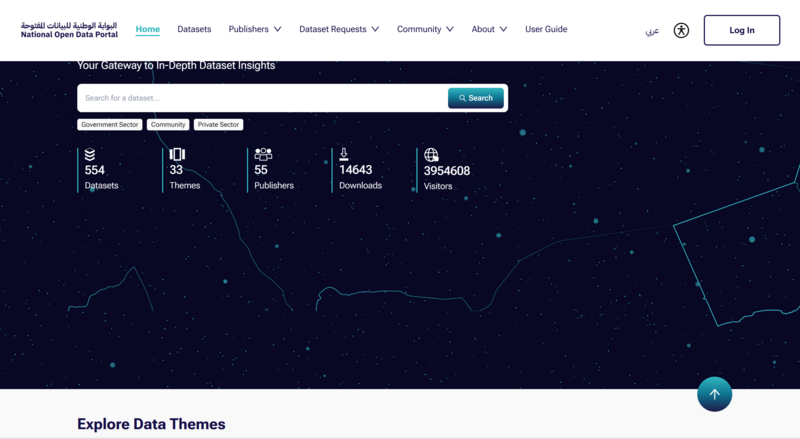
GGTC Kyiv
OverviewThis initiative aims to strengthen transparency and accountability by making government data accessible to citizens, researchers, and developers across sectors such as health, education, economy, and environment. The portal features an interactive user-friendly interface and advanced analytical tools designed to stimulate innovation and support research projects.Currently, 57 government entities contribute their data to the portal. There are more than 400 datasets available, covering diverse topics including tourism, transport, education, business, and more. This extensive availability of data supports research, innovation, and informed decision-making across sectors, reinforcing Oman’s commitment to transparency and open government initiatives.
National Open Data Portal
Digital transformation offers governments a powerful pathway to improve public service delivery and strengthen state capability. Yet without clear guardrails – and amid incentives that often prioritize speed and visible delivery – these efforts can deepen exclusion, weaken accountability and produce systems that fail to reflect the lived realities of citizens, ultimately eroding public trust and government legitimacy.In practice, these challenges stem less from the technology itself than from how decisions are made across the design and deployment of GovTech and digital public infrastructure (DPI) solutions. The GovTech Compass: Ten Principles for the Responsible Implementation of GovTech and Digital Public Infrastructure responds to this gap by offering a principles-based framework for more responsible and effective digital transformation. It sets out 10 practical principles to guide decision-making across the GovTech and DPI life cycle, helping governments and ecosystem stakeholders navigate trade-offs, align incentives and embed public value at the core of implementation.
The GovTech Compass: Ten Principles for the Responsible Implementation of GovTech and Digital Public Infrastructure

World Economic Forum
This article is authored by Viktor Nestulia, Head of the DREAM Project Office, Open Contracting PartnershipAmid large-scale reconstruction needs, Ukraine is rethinking how public investment is managed, combining global standards with digital infrastructure to create a more transparent and coordinated system.Effective Public Investment Management (PIM) is the cornerstone of economic growth and fiscal sustainability ensuring the planning, development, modernisation and maintenance of infrastructure projects. Research from the IMF indicates that countries, on average, lose approximately one-third of the potential economic impact of public investment due to inefficiencies in PIM processes, such as poor project appraisal and fragmented planning. Ukraine accelerated the transformation of its PIM system in 2022. The initial catalyst were large-scale reconstruction needs due to the full-scale war, an estimated USD 587.7 billion over a 10-year horizon that is equivalent to almost three times of Ukraine’s 2025 GDP. To respond to this challenge, Ukraine transitioned from a fragmented inefficient PIM system with 18 different disconnected public investment procedures to a unified model with a comprehensive digital platform at its core — the DREAM ecosystem.Ukraine’s PIM reform serves as a practical case study for reengineering public sector procedures and processes based on GovTech principles, including interoperability, agile development, open data use, and collaboration between the government and civil society.Ukraine provides an operational model applicable for public investment efforts more widely. It can be replicated not only for reconstruction but also for specific infrastructure development, climate disaster response, or developing territories under financial constraints. Currently entering the scaling and institutionalisation phase, the reform demonstrates how international PIM standards can be redesigned based on comprehensive digital solutions.Bottom-up Initiative and Reliance on Global Practices  The structural framework of the reform aligns with proven global standards, largely drawing on World Bank recommendations based on its 2022 Public Investment Management Assessment report. The report identified previous systemic vulnerabilities: fragmentation, poor alignment between planning and budgeting, and a lack of standardised procedures.The new PIM methodology was developed in collaboration with experts from EIB JASPERS, UK NISTA, the World Bank, the Open Contracting Partnership, and others, adapting tools like the UK Five Case Model for project appraisal and the Open Contracting Data Standard. To meet IMF and World Bank requirements for a comprehensive public investment management information system, Ukraine structured its government IT solutions around an integrated digital platform.A notable aspect of Ukraine’s PIM reform implementation is that the conceptualisation of its digital backbone, the DREAM ecosystem, originated from civil society organisations teamed up in the RISE Ukraine Coalition, before being adopted as government policy. This represents a bottom-up approach to complex GovTech project development.An Open Digital Architecture: Dream as a “System of Systems”    The DREAM ecosystem serves as this digital foundation, deeply integrating with existing government databases, including the Register of Damaged and Destroyed Property, the e-construction management system, the Prozorro public procurement system, and the spending.gov.ua portal, among others. By establishing a unified digital pathway for managing investment projects, the system enforces a clear entry point to the process and a once-only principle for data entry, eliminating duplication. It facilitates complex strategic functions such as selecting projects based on specific criteria, the preparation of medium-term investment plans, and the formation of single project pipelines.The DREAM ecosystem follows GovTech principles by transitioning from retrospective analysis to a real-time transactional system (OLTP) so the planning, expert assessment, and funding approvals happen directly within the digital platform. Built on the standardised global open data schema for public procurement, the Open Contracting Data Standard (OCDS), DREAM ensures access to open data and citizen participation. External analytical services like the Big Recovery Portal or the Clarity Project can automatically extract machine-readable data, providing civil society and journalists with tools to monitor projects across all stages and mitigating risks of overspending and corruption.Conceptually, DREAM is a “system of systems” structured around a core Business Logic Layer that guides users through all stages of the project and programme implementation. This core layer is supported by the Integration Layer that automates the data exchange, while the Public/Presentation and Analytical layers equipped with the Business Intelligence module ensure accessible data. A Risk Management Layer applies algorithms to detect deviations in cost or schedules, while AI Assistant provides real-time contextual prompts, reducing the risk of human error during complex documentation.Comprehensive Implementation: Going Beyond a Digital SolutionComprehensive public investment reform requires concurrent adjustments to methodology, regulations, strategic communication, and capacity building. The implementation relied on a cross-functional “teams of teams” model that involves the Ministries of Finance, Economy, and Development, alongside the developer, international donors, and the DREAM Project Office representing the expert community and civil society.While the technical functionality of the DREAM ecosystem was being developed, the legal team that brought together representatives of the government, the DREAM Project Office and sectoral experts worked on institutionalising the new workflows, initiating amendments to the Budget Code and drafting government resolutions. Simultaneously, a cross-sectoral team and dedicated department of the DREAM Project Office — the DREAM Academy — developed methodological materials, instructions and organised training sessions across the country to build the capacity of local government employees. In 2025 alone, it delivered over 70 training sessions, both offline and online, to 30,000 specialists to help regions operationalise the new investment planning rules. This multi-level organisational support helped mitigate resistance to change and facilitated the digital solution's day-to-day integration.The DREAM Project Office team uses an agile approach driven by a comprehensive monitoring and learning framework. The tradeoffs of this iterative method included heavy team workloads, compressed testing periods, and the need for extensive coordination among the “team of teams”. But thanks to this partnership-oriented approach the team achieved significant results during the first two years implementing the PIM reform.Real Impact: The Current Achievements of PIM ReformAs the PIM reform in Ukraine moves into the scaling stage, the operational data so far provides clear measurable outcomes across several metrics:Standardisation of procedures: The project management has transitioned to a unified digital methodology. Currently, 100% of investment projects are implemented through a single procedure, with data accessible via the ecosystem's Public Portal and Business Intelligence Module.Medium-term planning: In 2025, the first cycle of medium-term investment planning in Ukraine was completed, resulting in the creation of the initial Medium-Term Plans of Priority Public Investments and State Single Project Pipelines at national, sectoral, and local levels.System adoption: The DREAM ecosystem is used by 89% of communities, as well as all ministries and government organisations engaged in PIM processes.Automated funding distribution: Financial programmes, such as those allocating funds for school shelters and food, used DREAM to process applications. This transparent approach accelerated the implementation timeline sixfold, down from 6 months to 1 month.The next phase of the reform involves deploying digital procedures for monitoring implementation and auditing investment projects, aiming to increase financial flexibility and investment efficiency within the medium-term cycle.Lessons for the Global Community: Digital Transformation of the Pim SystemUkraine’s experience demonstrates that integrating technology can structurally reinforce institutional sustainability. Combining standardised global public finance frameworks with an open IT ecosystem architecture facilitates a transition from fragmented manual allocation to evidence-based strategic planning. This operational case provides a structural model for rethinking how governments can manage public investments with greater accountability and effectiveness.The views expressed in this article are those of the author(s) and do not necessarily reflect the views of the World Economic Forum. The content was provided by the contributing organization and is shared to encourage dialogue and the exchange of diverse perspectives. The World Economic Forum remains impartial and does not necessarily endorse any political views or specific language used.
Rethinking Public Investment: How Ukraine Combines Global Frameworks With Digital Innovation

GGTC Kyiv
Agentic artificial intelligence (AI) is driving a fundamental shift in capability, allowing systems to autonomously execute end-to-end, multi-step workflows. This technological progress is poised to transform how governments operate and serve citizens. However, without a strategic, evidence-based grasp of where agentic AI can deliver the greatest public value – balancing high potential with manageable complexity – governments risk investing in the wrong places, undermining confidence in the technology and launching pilots that fail to scale.This report, Making Agentic AI Work for Government: A Readiness Framework, applies a novel, department‑agnostic perspective on government activities. It provides a clear approach to assess where agentic AI can deliver the greatest public value and what risks must be managed before deployment at scale.Drawing on a global assessment, it offers initial orientation on starting points for agentic AI as well as corresponding real-world use cases, highlighting current initiatives in the public sector.Explore high-impact opportunities for agentic AI through this practical toolkit based on insights from the report.
Making Agentic AI Work for Government: A Readiness Framework

GGTC Berlin, World Economic Forum, Capgemini
The problem: permit procedures that outlast the projects they authoriseLarge-scale infrastructure permit procedures in Germany are among the most documentation-intensive processes. Reviews sometimes take longer than the projects they are meant to authorize, delaying investments despite available mandates and funding. This erodes planning reliability, pushes strategic objectives beyond legislative cycles and reduces the effective use of public resources.  The solution: same-day screening with human oversightTo address this, the BMDS developed a solution allowing permit submissions to be screened on the same day they arrive. The system analyses application materials, structures submissions, maps case-specific facts against applicable legal norms and consolidates relevant provisions across interconnected regulatory domains. On this basis, it can generate drafts for legally grounded permit decisions under human oversight to support the review process. At this stage, the system has limited autonomy, allowing for gradual expansion once confidence and reliability increase. This reflects that scaling is not only a matter of technical feasibility – it also requires people to trust and confidently work with agentic systems.  Scaling responsibly: targeted AI where it adds valueWhile agentic approaches to automating legal reasoning are emerging across several fields, scaling to a truly agnostic solution is challenging due to computing capacity, cost and energy constraints. Therefore, rather than scanning the full body of administrative law, the system narrows the legal search to the relevant domains for each case – for example, a wind turbine permit only draws on specific environmental and regional regulations. This targeted approach enables scalable deployment while applying AI capacity only where it genuinely adds value. 
AI-based construction permit system – German Federal Ministry for Digital Transformation and Government Modernization

World Economic Forum

Partner with us

Learn about how your organisation can partner with our Initiative.

Follow us

Become a follower to stay in touch with our initiative's work.

Supporters  

Global Government Technology Centre in Kyiv is supported by the EGAP Program, implemented by East Europe Foundation with funding from Switzerland, and initiated and supported by the Ministry of Digital Transformation of Ukraine.

Strategic Partners

We believe true innovation in government happens through collaboration. Together, we identify key challenges, design evidence-based solutions, and deliver measurable impact.


VoxUkraine

UA | Think Tank

InfoSapiens

UA | Research Agency

CDTO Campus

UA | EDU Project

Diia. Digital Hromada

UA | Public Entity

GGTC Berlin

GE | GovTech

GovTech Alliance of Ukraine

UA | GovTech

Part of the Centre for Frontier Technologies and Innovation

Empowering leaders to unlock the potential of frontier technologies and accelerate their inclusive and sustainable adoption.